Blog and housekeeping30 Mar 2024 08:55 am

I have been shifting away from blogging to using video. https://www.youtube.com/channel/UCb-4Zridp0KqFm7_XIPIsHA
A brain tumor is not necessarily a "death sentence".
However, it is a life changing occurrence!
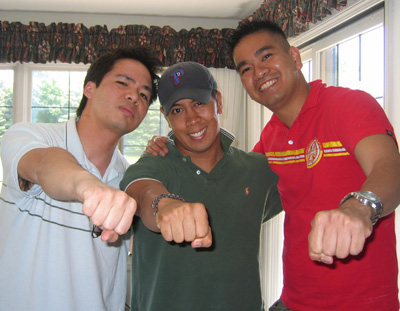
Welcome to "They Call Me 'Galvez'". My friends really do. I can be friends with almost anybody! I'm just a regular guy that had a brain tumor and wants to do something positive with it. This web site is dedicated to my unique journey over the last year. I'm a 31 year old physical therapist in beautiful San Diego, California. I was diagnosed with a golf-ball sized brain tumor in September 2005. I had brain surgery a month later to remove it. It took me almost 1 year to fully recover. I've always believed that things happen for a reason. I really feel like all my life experiences helped me to deal with this crushing diagnosis. I have led a very interesting life thus far, but I still have a lot of things I need to do. After the surgery, I was receiving rehab at the hospital where I used to work. The people I used to work side by side with were now treating me as a patient! Please take your time browsing this site to learn more about my wild ride through this unique experience. If you’re a student or brain tumor patient, drop me a line; I'd love to hear from you
I have been shifting away from blogging to using video. https://www.youtube.com/channel/UCb-4Zridp0KqFm7_XIPIsHA
This got my creative juices flowing after neurosurgery Oct. 25, 2005. I was twiddling my thumbs when I was finally discharged home from the hospital.
This was a message to my family and friends…
 The COVID-19 pandemic has hit me pretty hard. So much has happened in the past year. I made the difficult decision to dissolve the nonprofit, mAss Kickers Foundation because of all the travel restrictions. It just did not make sense to take immunocompromised oncology thrivers on international trips during the global pandemic. I also decided to move back to Michigan in December 2020 to be closer to family. I was living alone in Houston and both my parents are getting older. The COVID-19 situation had me worried about all my family at risk! At first I felt defeated returning to Michigan with nothing, but then I realized that there are still A LOT of opportunities back home in Ann Arbor! I have been getting re-involved in the physical therapy profession through both the American Physical Therapy Association (APTA) Oncology Section, Balance and Falls Special Interest Group AND ALSO the World Physiotherapy: IPT-HOPE (International Physiotherapists for HIV/AIDS, Oncology, and Palliative care Empowerment). I have been able to apply my experiences in the nonprofit world to a new position as “Director of Communications and Membership†for the APTA ONCOLOGY, Balance and Falls SIG and also the role of “website manager†for IPT-HOPE. I’m most excited to get re-involved in the physical therapy profession. Returning to the world of Physical Medicine and Rehabilitation with the perspective of a brain tumor survivor with severe balance and coordination impairments will add unique insight to the activities and goals of the APTA Oncology B&F SIG. Falls in the survivor population is typically overlooked in liu of more “pressing” oncology/medical issues. However, falls can be devastating to oncology patients with unexpected emergency room visits, fractures, or even debilitating hospital admissions! As health care professionals we need to prevent falls and educate oncology patients for their risk of falling.
 The APTA ONCOLOGY, Balance and Falls SIG has initiated a new project to determine the fall risk in oncology patients. There are few peer-reviewed published research/data on falls in the oncology population. The US Center for Disease Control and Prevention’s STEADI program (Stopping Elderly Accidents, Deaths, and Injuries) was selected from a list of Fall assessment questionnaires because it was the most reviewed, evidence-based screening tool we found. This first year, we are attempting to do fall screenings using the STEADI at Cancer Centers across the United States to screen for fall risk in the oncology population. We are very excited to initiate a national oncology patient fall screening campaign this year in collaboration with oncology physical therapists across the US. We are planning on doing this around PT Day of Service during Physical Therapy Month in October at Cancer Centers across the US.
The goal of the project is to not only screen oncology patients for their fall risk, but to also highlight the importance of physical therapy in the cancer survivorship continuum. The risk of survivors falling will most likely increase due to advancements in oncologic treatments and an aging cancer population (more survivors in both cases).
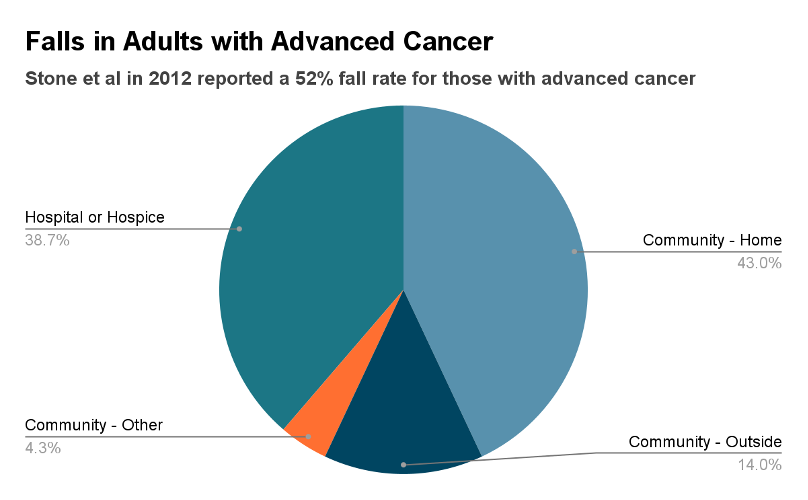
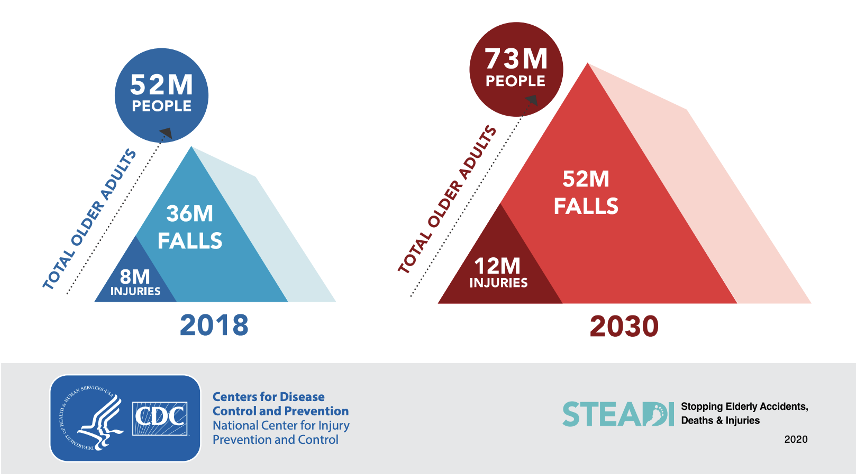
Physical Therapists are the most qualified healthcare professionals to address falls in the oncology population. We have more exciting physical therapy related projects in the works! Please email me at ericgalvez714@gmail.com if you would like to get involved in the 2021 Fall screening on PT Day of Service.
Cooking adventures… I’m Shakin’


Times Like These… #BlackLivesMatter

I haven’t talked about this since it happened, but the experience has stuck with me ever since it occurred. It was my first real experience as an ethnic minority. Let me paint the situation, there was a lot of tension between my high school and another local high school. I think one of my classmates got jumped by students from the another local high school, so tensions were high. We had a dance at our school the week the tensions were escalating, so the police were called to our high school to manage any potential situations. I arrived at the dance with my high school girlfriend in my varsity jacket adorned with wrestling and track medals. When I parked my car and walked towards the dance. We were then approached by two police officers with huge maglight flashlights . I was told to stop and immediately return to my vehicle. I had the light shined in my face and started getting showered with questions. This was the first time I had ever spoken to a police officer on duty. I was a new driver so I was already nervous. “What’s your name?” “Do you go to school here?” “Is this your car?” “Where were you before coming here?†“Who were you with before coming here?†While this was going on, all of my friends were arriving and calmly strolling into the gym, wondering what was going on. I remember being alone with the officers thinking, “This is embarrassing, I’m just trying to go to this dance.” My dad recently got the car and hadn’t added my name to the registration, so when they ran the records, my name didn’t show up. The officers radioed the station to contact my parents at home even though we had the same last name to verify we were related! I was shocked that I was being singled out. It seemed matter of fact, but the way they were questioning me was extremely forceful. How come none of the other students were being interrogated? Why was so much time being spent on me? I was the only student that was stopped and interrogated the whole night. I had never felt so different. I was a straight “A” student, champion athlete, and student leader, BUT I was the ONLY ONE that got interrogated the whole night! None of that mattered to the officers. To them I was a trouble maker. I realized that the only thing the police saw was the color of my skin, they could have cared less about everything else. Other classmates would get drunk or high in the parking lot before dances, but I always played by the book. I never got in trouble and in elementary school I was mocked for being a “goodie-goodie.” For the first time in my life, I felt like I was different and I was being judged for it. Until then, I knew I was different but it was never held against me. No guns were drawn and there were no acts of violence, but I definitely felt singled out. I couldn’t enjoy myself the rest of the night. That event made me realize that I was truly different. No matter what I accomplished, I was always going to be the non-white kid trying to fit in. First impressions are affected by preconceived notions. The color of your skin is one of the first things people notice when meeting new people. Being exposed to people and cultures that are different than your own at a young age can help, but ultimately it will come down to personal interactions. I’ve noticed that there is little interaction between different communities. Why is that?
First impressions are instinctive. I get that. Whenever I travel to different countries, I get A LOT of stares and curious looks because I use a wheelchair/scooter or crutches to get around. There are times when I wish people would stop staring and just talk to me. First impressions generally stick until they are disproven. Again, I am faced with preconceived notions, not only as a person of color, but also as a person with a visible physical disability. I’m viewed as either “someone who deserves your pity” or an “inspirational hero who can do no wrong”. It is human nature to develop personal opinions, but I’m unsure how to address this issue of preconceived notions. I think that perhaps early exposure/meaningful face to face interaction could make things easier. This is why I like interacting with students and kids. They are not yet set in their ways. They can be taught. It will be up to the youngest generations to change these preconceived notions. These are some historic times, so it will be interesting to see how race relations play out. They cannot be ignored any longer.
As a Filipino-American and Asian Pacific Islander American, I understand why the #BlackLivesMatter movement is so important and fully support it! While my negative experiences with the police pale in comparison to other people, the #BlackLivesMatter experiences need to be recognized. I’m glad they are being shared. Under represented populations need to show support for each other. The next step is rectifying the occurrences. Personally, I would like to see more positive interactions between different communities. Perhaps law enforcement academies need to do more community outreach. Or perhaps update their curriculum. Food and sporting events are the only things I can think of that have the potential to bring people of color and law enforcement officials together. Suggestions?

Memorial Day is a very special day in the US where we honor all the United States Military service members who sacrificed their lives to defend and protect the American way of life. Before moving to San Diego, I was a little naïve. I had no idea what Memorial Day really meant. Of course I knew what the day was for, but I never really appreciated what it meant. I had the honor of meeting so many military personnel in San Diego and speaking at a US Army health conference at the Yongsan Garrison near the North/South Korea demilitarized zone. After that trip, I have learned to appreciate what the military does for us. I admire the sacrifices they make to keep Americans safe.
When I was younger, Memorial weekend used to be a BIG PARTY WEEKEND! Monday was a day off from school/work, making Sunday night an extra night to party with my friends. It started in college when I used to travel to California for my fraternity’s national convention. It always coincided with a sorority’s national convention so it was always a fun extended weekend! After college, our get togethers carried over to Memorial Weekend reunions when we were all in grad school or starting our professional careers. Once everyone started getting married and having kids, it became more difficult to get everyone together.
As I sit here and think about all the sacrifices that were made for the simple American freedoms, I wonder how the country has become so divided? Memorial Day should be a day that unites us. Is there anything that will unite the county? Philanthropy? Health issues? Something that is common to ALL? I don’t think any one person or political party will be able to do it. The country is polarized by “left†and “rightâ€political views. Politicians need to take off their political hats and stop pointing fingers at each other. Stop acting like children. I really think that during these troubling times it will come down to individual communities to take care of each other. It’s funny how the meanings of holidays like Christmas OR special occasions like birthdays evolve as you age. I appreciate Memorial Day now! To all military service people: THANK YOU! This country needs to evolve and unite everyone in these difficult times. Collectively, we need something to believe in.
United we stand. Divided we fall.

I’m very worried about the threat of potential violence after the November Presidential election. The country is extremely divided. I have a feeling that people on either side of the political spectrum will be upset regardless of the results. Violence is inevitable between 2 sides that feel strongly about an issue. I really hope the authorities are prepared for civil unrest with a change of power OR another 4 years of this administration. There were already people with guns protesting the “stay at home” orders at state capitals. I am concerned because in 2017 A car ran through a crowd of counter “Unite the Right” protesters in Charlottesville. The gap is widening between different ideologies. The right to protest is what defines America, but bringing weapons to a protest is inviting trouble. I don’t understand the reasoning for bringing weapons to a protest unless you intend to use them.
What happened to being the UNITED States of America? Political allegiances have divided the country. When was the last time this country was truly united? I’d make a case for WWI. We had a common enemy. Currently our common enemy is a virus that has no vaccine or cure. I am very disappointed that our current leadership is doing nothing but stoke the fires of unrest and pretending to know what we are doing. We need leaders to make difficult decisions and refuse to play the political games. I’m so sick of the banter on both sides. I really think that when the political divide starts to influence the public health and wellness of American citizens nationally there is a problem.
Maybe I’m being too cautious, but the fact remains that until there is a vaccine everyone is still at risk. I understand that some people are eager to return to normal, but this pandemic is still going on. Just because it isn’t prevalent in your community doesn’t mean it is over! While your personal risk maybe low, for some the risk remains high. I don’t understand how people can be so selfish and not think of their fellow citizens still at risk. For example, People of color are at higher risk for contracting Covid-19 due to poor nutrition/obesity, poverty, and stress. Reminder… There is no vaccine! As someone with a “pre-existing condition” at risk, I don’t feel comfortable yet going out in public settings. I understand why some are eager to go out and about because they feel fine, but people need to understand the extended social distancing orders are in place to protect the most vulnerable. This is a time to support the scientists/researchers. I will listen to them over the politicians at this point! Just had to get that off my chest…

Soul Searching… Where do I go?

That song cracks me up. It reminds me of a much simpler time acting stupid with my college friends. So many ridiculous conversations and dares. Priorities were so different. We thought we knew everything without a care in the world! However, the decisions we make now carry so much more weight. I’m getting the urge to move again. Maybe it is time to move back to San Diego or Michigan. Houston has grown on me, but I still have responsibilities in San Diego and Michigan. Over the next few months, I will have some major soul searching to do. I think I could do well in San Diego, Ann Arbor, or Houston but I still need to figure out what I want. I have familiarity and comfort in San Diego. It was the perfect place to live! You can’t beat the weather and activities out there. It would be AWESOME to return to San Diego! Returning to Michigan would be for my family, but there are many potential opportunities there. Plus I would save A LOT of rent money! BUT… Houston has really grown on me and I could envision settling down here! I don’t think I have fully experienced Houston yet! I really like the Texas lifestyle and southern hospitality. I don’t mind the heat. I prefer it to the subzero winters. There are “professional opportunities†in all three places but I still need to prioritize… Anything could happen! Right now, I think I could be happy in any of those places! Any input would be greatly appreciated! My lease ends in Feb, so I have some time to make a decision…

They Call Me Galvez
He was diagnosed with a Brain Tumor. He is a physical therapist that became a patient. He became someone he's always tried to help. He's published 2 books, started an organization, started a business. What is he up to now?
There are 127 posts and 35 comments so far.
